Off Road 4x4 Driving Simulator
- 4.3
- Rating
- 50.00M
- Installs
- Free
- Price

 Analysis by App-foxy
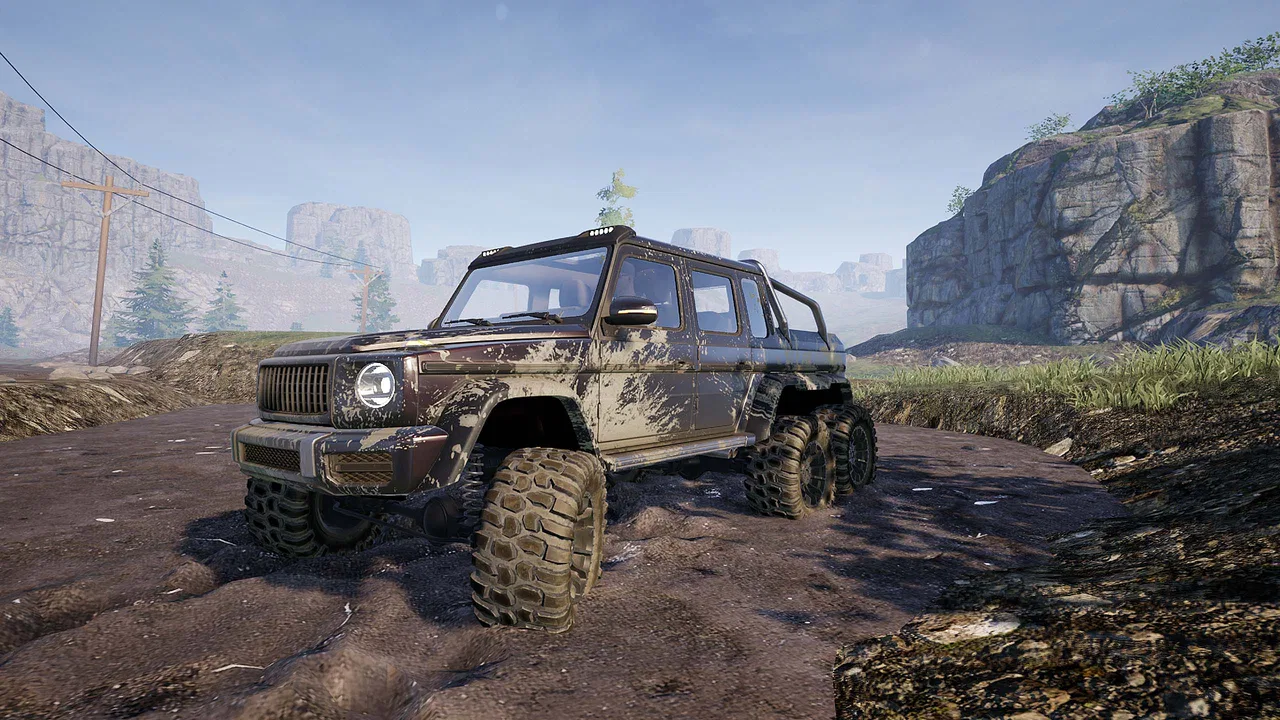
I approached Off Road 4x4 Driving Simulator expecting a straightforward mud-driving game, but its appeal is more specific than that. It is a free Android racing game from Azur Interactive Games Limited built around the fantasy of taking a pickup, SUV, or truck away from clean roads and into rough terrain. That focus gives it a different rhythm from road racers: speed matters, but choosing a line, keeping control, and dealing with awkward ground are just as important.
After spending time with it, I see the game as a good fit for players who enjoy vehicle handling more than perfect lap times. It is easy to understand at first, yet the off-road setting creates enough friction to make simple driving feel like a small problem to solve. The experience is not aimed at people who want a deep motorsport simulation or a huge competitive ecosystem. Instead, it works best as a casual driving game for short sessions, especially when you want something more physical and messy than polished asphalt racing.
How the first goals make the driving feel worthwhile
The opening appeal is immediate: select an off-road vehicle and start learning how it behaves outside normal racing conditions. The early goals feel less like memorizing a circuit and more like proving that you can get through difficult ground without losing control. That distinction matters. In a conventional arcade racer, the first few attempts usually teach braking, cornering, and acceleration. Here, the same actions are shaped by terrain, vehicle weight, and the need to approach obstacles with some patience.
You May Also Like

 Blood Strike: 2.5 Anniversary
Blood Strike’s Loadouts Turn Every Drop Into a Tactical Gamble
A close look at Blood Strike’s custom loadouts: how fast access to signature weapons reshapes its battle royale rhythm, rewards preparation, and narrows the gap between fights.

 Pandora - Music & Podcasts
Pandora’s Music Is Easy to Start, but Harder to Recover
Pandora’s strength is its low-effort path from a seed to a station. Its weak spot is how much confidence it asks you to place in connection, setup, and quiet recovery.

 8 Ball Pool
 Is Built on Rivalries, Rematches, and Routine
A close look at the rivalries, rematches, shared routines, and unanswered safety questions that turn a quick pool match into a persistent mobile community.

 Samsung Music
’s Quiet Strength Is Playing What You Already Own
Its reach comes less from spectacle than from dependable access to a personal library. That simplicity is both the app’s strongest retention engine and its ceiling.

 AccuWeather: Weather Radar
AccuWeather Review: A Quick, Clear Forecast for Everyday Decisions
For everyday plans, the best forecast is the one you can understand quickly. AccuWeather makes rain timing, radar, and local conditions easy to act on, with a few trade-offs.

 Hill Climb Racing
Why Hill Climb Racing Still Turns Crashes Into One More Run
A tiny car, a bumpy hill and one more upgrade: Hill Climb Racing keeps resurfacing because its simple chaos makes every near-miss feel personal.
More From Our News Desk



I like that this creates a natural reason to replay an area. A first run can be about simply reaching the finish or surviving a troublesome section. A later run becomes an attempt to take a cleaner route, carry more momentum, or avoid the clumsy correction that sent the vehicle sideways. Even when the immediate objective is simple, the driving itself supplies a small layer of mastery.
The choice of vehicle also supports the early learning process. A pickup, SUV, and truck suggest different expectations behind the wheel, even before a player becomes familiar with their handling. A heavier vehicle can feel reassuring when the path becomes uneven, while a more agile one may be easier to place through tighter sections. I would not treat the garage as a reason to expect a full simulation of every real-world model. Its value is practical: it gives the player a reason to experiment and discover which type of vehicle matches their driving style.
For a newcomer, my best advice is not to chase maximum speed immediately. In mud and rough terrain, aggressive throttle can turn a manageable section into a recovery problem. I found it more useful to enter difficult patches with a controlled approach, then accelerate once the vehicle was pointed in the direction I wanted. That habit makes the first goals feel less random and gives the player a clear skill to improve.
A realistic use case is a short evening break. I can imagine opening the game with only a few minutes available, choosing a vehicle, and trying one route without needing to remember a complicated story or a large set of controls. If the attempt goes badly, the failure still teaches something about the ground and the vehicle. If it goes well, the satisfaction comes from having handled a troublesome stretch rather than merely crossing a finish line at high speed.
What progress feels like during ordinary play
The most useful progress signals are the ones created by the player’s own driving. Reaching a section that previously caused trouble, completing a route with fewer mistakes, or learning when to slow down all make the next attempt feel more informed. This is a quieter kind of progression than a game with constant rewards, but it suits the off-road theme. The road itself becomes the lesson.
I also appreciate that the game’s central fantasy remains consistent. It does not need to turn into a standard city racer to stay interesting. The focus stays on 4x4-style driving, and that gives each improvement a clear context. You are not simply getting better at tapping a boost button; you are getting better at managing a vehicle where traction and positioning matter.
That said, players who need a strong stream of visible unlocks may find the experience less immediately satisfying than a more conventional racing game. The attraction depends heavily on whether you enjoy repeating a route to improve your control. If your idea of progress is a constantly expanding collection of dramatic rewards, this may feel restrained. The game is at its best when the act of driving is itself enough motivation to try again.
I would approach vehicle changes as experiments rather than automatically assuming that the newest or most impressive-looking option is best. A truck may feel stable but demand more care in narrow spaces. A smaller vehicle may respond more quickly but punish careless steering. Testing a vehicle on a familiar route is a useful way to separate genuine handling differences from simple first impressions.
Where the difficulty curve earns its place
The difficulty works when it asks for better decisions rather than merely making the vehicle feel unfair. Off-road driving naturally provides several ways to increase challenge: rougher surfaces, less forgiving approaches, tighter spaces, and sections where a small mistake changes the entire run. These pressures make the player consider speed and control together.
My experience is that the game rewards a measured pace more than reckless acceleration. That can be surprising for anyone arriving from an arcade racer, where staying on the throttle is often the safest plan. Here, slowing down before an awkward section can save time overall because it prevents a spin or a badly positioned landing. The best runs feel deliberate without becoming slow.
There is also a useful difference between knowing what to do and executing it cleanly. I may understand that a slope needs a wide approach, yet still enter it at the wrong angle. That gap keeps the challenge alive. The game can be accessible to a casual player because the basic idea is obvious, while still offering room for improvement through repeated attempts.
One practical technique is to treat the camera and vehicle alignment as part of the challenge rather than as background presentation. Before committing to a difficult passage, I try to make sure the vehicle is already pointing toward the exit I want. Correcting halfway through a rough section is usually more dangerous than setting up properly beforehand. This is a small habit, but it changes the game from reactive steering into planned driving.
Another useful approach is to divide a route into decision points. Instead of thinking only about the finish, I focus on the next muddy patch, incline, or awkward turn. That keeps a failed attempt informative. If the run ends at the same point repeatedly, I can adjust my entry speed or line rather than blaming the whole course. This kind of self-coaching is one of the better reasons to return.
The game is not the right choice for someone looking for a highly technical off-road simulator with extensive tuning, detailed vehicle setup, and competitive racing analysis. Its challenge comes from driving through the environment, not from building a professional rally program. Players who want licensed motorsport structure or strict lap-time competition will probably find a dedicated racing title more satisfying.
Why the pacing keeps some players returning
The pacing is strongest when a run is short enough to invite another attempt but demanding enough that the next attempt has a purpose. Off-road mistakes are often easy to understand: I entered too quickly, turned too late, or failed to prepare for the surface ahead. That clarity makes repetition feel useful rather than empty.
There is a gentle retention pressure in wanting to conquer the section that just defeated me. I do not need a dramatic narrative explanation to understand the goal. The obstacle is visible, the mistake is personal, and the solution seems close. This is a good structure for mobile play because it supports both a quick session and a longer stretch of experimentation.
Still, the same loop can become repetitive if the player does not enjoy vehicle control for its own sake. The game’s long-term appeal depends less on surprise and more on refinement. Once the novelty of driving through mud fades, the question becomes whether improving a route remains enjoyable. For me, it does for a while because the handling gives each attempt a practical focus, but I would not recommend it to someone who needs constant new mechanics to stay interested.
The free price makes it easy to try, although the presence of in-app purchases means I would approach the progression with a little awareness. Individual purchases range from $0.99 to $59.99, so players should decide in advance whether they are comfortable spending or prefer to treat the game as a no-cost driving experience. I would not make a purchase simply to bypass a frustrating attempt. First, I would replay the route, test another vehicle, and see whether the problem is actually a driving habit.
This is especially important for younger players. The game is rated Everyone, which makes it broadly accessible, but the purchase range still deserves attention on a shared device. A parent who wants the game used strictly as a free title should set that expectation before handing over the phone or tablet. The age rating describes the content audience; it does not remove the need to think about optional spending.
Performance expectations also deserve a realistic answer. The listed minimum operating system is Android 9, and the current version is 2.24.437. That makes compatibility straightforward for many Android users, but a supported operating system alone does not guarantee that every device will feel equally comfortable during driving. On an older phone, I would close unnecessary background apps and avoid judging the game from the first few seconds of a busy session. Smooth control matters more here than it would in a menu-heavy game because a small input delay can affect a difficult turn.
The game has reached over 50 million installs and holds a 4.5 average from around 247 thousand ratings, with roughly 2.8 thousand written reviews. Those figures suggest that the basic concept has found a substantial audience, but they do not change the personal fit question. A popular off-road racer can still be wrong for someone who prefers clean circuits, realistic racing rules, or multiplayer competition. I would read the broad response as evidence that the driving idea is accessible, not as a promise that every player will enjoy the pacing.
How it compares with ordinary racing alternatives
Compared with a typical arcade racer, this game gives up some of the instant speed and replaces it with terrain management. That makes it less exciting if your favorite moment is a perfect high-speed lap, but more interesting if you enjoy recovering from an awkward slope or finding a safer line through mud. The satisfaction is slower and more physical.
Compared with a serious simulation, it is easier to approach. I do not need to study real racing regulations or understand a complex setup before I can enjoy a run. The trade-off is that players seeking detailed mechanical realism may eventually want something more specialized. This game sits between casual driving and simulation: approachable enough for a quick session, but grounded enough that careless inputs have consequences.
It also differs from endless racers, where the main objective is often to survive as long as possible while reacting to an uninterrupted stream of hazards. Here, the off-road setting makes the route feel like a place to learn. I can think about a specific obstacle, test a different approach, and build a personal routine. That makes it a better choice for deliberate practice than for players who want nonstop reflex action.
For someone choosing between this and a polished road-racing game, I would ask one question: do you want the vehicle to feel challenged by the ground? If yes, this is the more distinctive option. If you mainly want speed, overtaking, bright city scenery, and immediate competition, a conventional racer will probably provide more energy per minute.
Who should play, and who should skip it
I recommend it to casual racing fans who like trucks, SUVs, and pickups, especially those who enjoy learning a route through repetition. It is also suitable for players who want a driving game that does not require a long story commitment. The controls and objectives are easier to understand than the deeper systems found in simulation-focused alternatives, while the terrain gives the experience more character than a generic straight-line racer.
I would be more cautious about recommending it to players who dislike restarting after small mistakes. Off-road driving can punish a poor approach, and the game’s enjoyment depends on accepting that a failed attempt is part of the learning process. It is also not my first pick for someone who wants a social racing environment, a serious career mode, or a large range of motorsport disciplines. Its identity is narrower, and that is both its strength and its limitation.
For a family device, the Everyone rating makes the content approachable, while the optional purchase range is the practical detail worth discussing. For an older Android phone, the minimum Android 9 requirement is the first compatibility check. For a player with only short breaks, the repeatable driving loop works well. For a player planning long daily sessions, I would first decide whether route mastery alone can sustain that level of interest.
My verdict on the progression and staying power
My final view is positive, with a clear condition: the progression works because the driving itself supplies the challenge. The early goals are easy to grasp, the terrain gives improvement a visible purpose, and the pacing supports one more attempt without demanding a large time commitment. I enjoy the feeling of returning to a difficult section with a better plan rather than simply waiting for a stronger vehicle to solve it.
The limitations are equally clear. Players who need a constant parade of unlocks, deep tuning, structured competition, or dramatic variety may find the loop too focused. Optional purchases also mean I would keep spending under control and judge every upgrade by whether it improves enjoyment rather than merely shortening the learning process. The game is most rewarding when I treat progress as better driving, not as a race to remove every obstacle.
As a free racing game, it earns a place on my Android shortlist for off-road fans. Azur Interactive Games Limited has chosen a focused idea and built the experience around the contrast between powerful vehicles and difficult ground. I would download it for relaxed pickup-and-play sessions, recommend it to a friend who likes muddy 4x4 driving, and skip it only if that friend wanted a conventional asphalt racer or a full competitive simulator. For the right player, Off Road 4x4 Driving Simulator turns a simple trip through rough terrain into a satisfying lesson in patience, positioning, and control.
FAQs for Off Road 4x4 Driving Simulator
01What are the main features of Off Road 4x4 Driving Simulator?
Off Road 4x4 Driving Simulator offers a variety of rugged terrains, realistic physics, and customizable vehicles. Players can explore open-world environments, complete challenging missions, and unlock new vehicles and upgrades. The game also features detailed graphics and immersive sound effects, enhancing the overall driving experience.
02Is Off Road 4x4 Driving Simulator available on both Android and iOS?
Yes, Off Road 4x4 Driving Simulator is available for download on both Android and iOS platforms. You can easily find it on the Google Play Store for Android devices and the Apple App Store for iOS devices. Ensure your device meets the minimum requirements for optimal performance.
03Does Off Road 4x4 Driving Simulator require an internet connection to play?
Off Road 4x4 Driving Simulator can be played offline, allowing players to enjoy the game without an internet connection. However, certain features, such as multiplayer modes or in-game purchases, may require connectivity. It's best to check specific game requirements for detailed information.
04Are there in-app purchases in Off Road 4x4 Driving Simulator?
Yes, Off Road 4x4 Driving Simulator includes in-app purchases. Players can buy additional vehicles, upgrades, or customization options to enhance gameplay. While these purchases can improve the gaming experience, they are optional, and the game can still be enjoyed without spending extra money.
05What should I do if I encounter technical issues while playing Off Road 4x4 Driving Simulator?
If you experience technical issues, first ensure your device meets the game’s requirements and that your app is updated to the latest version. Restarting your device can also help. For persistent problems, contact the game's support team through the app or their official website for assistance.
Pros
- Realistic terrain graphics enhance immersion.
- Wide variety of 4x4 vehicles to choose from.
- Challenging levels that test driving skills.
- Smooth controls for precise vehicle handling.
- No in-app purchases required for progression.
Cons
- Limited customization options for vehicles.
- Occasional lag on older devices.
- Repetitive sound effects can get annoying.
- Ads can disrupt the gaming experience.
- Multiplayer mode is not available.

Off Road 4x4 Driving Simulator
Gallery